
Clash of Forever
Object + Installation
2013.12
Cairo, EG


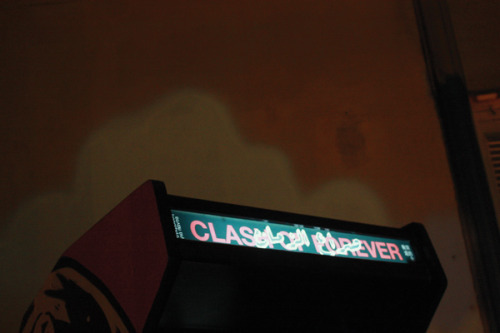

Metal, Glass + Light Bulbs + Speakers + Acrylic Paint on Wood
Standard video game “arcade”, but instead of controls and buttons, there is a sort of crank. And where the television screen is supposed to go, sits a large cylinder covered in pictographs. Upon turning the crank, the cylinder also turns, revealing a never-ending pictorial story: a cyclical clash between authority, faith, art, and feminism; The Clash of Forever.
First exhibited at a collaborated artist-curated exhibition with Ahmed Hefnawy, Ammar Abo Bakr, and Hany Rashed titled “Freedom/Shit”.
Video from Medrar.TV
Exhibitions:
Horreya/Kharya (“Freedom or Shit”)— Cairo, 2013
Related Work
Arabeque: Graphic Design from the Arab World and Persia
Publication
2008.04
Berlin, DE
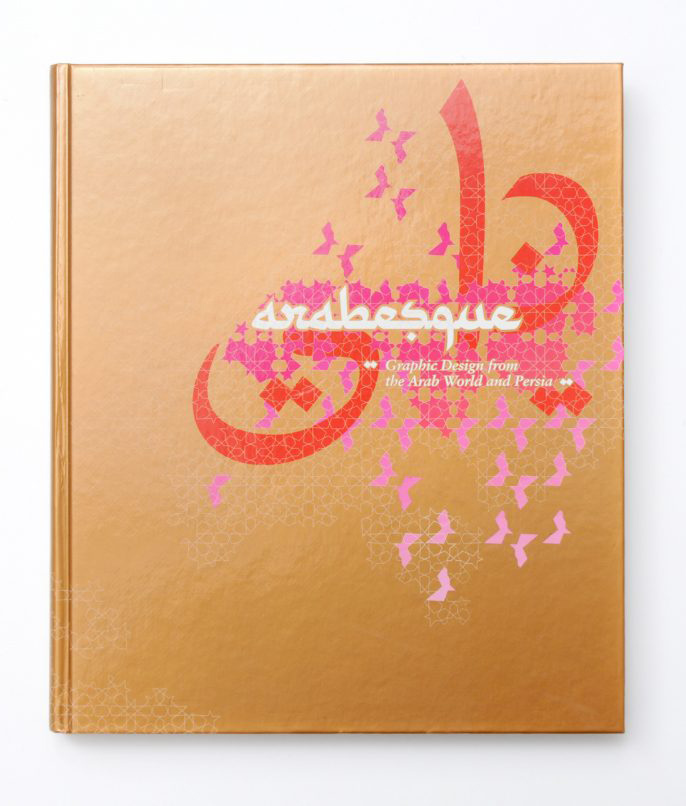
Arabesque is a book about contemporary graphic design from the Arab world and Persia. The book features examples of recent innovative and groundbreaking design work that is inspired by the richness of the Middle East’s visual culture, including a number of posters and graphic identities by Ganzeer. The main topic–Arabic typography–leads through six chapters.
Eps51 edited and designed the complete book in cooperation with Nicolas Bourquin. Published by the Berlin-based Die Gestalten Verlag in April 2008.
Eps51 edited and designed the complete book in cooperation with Nicolas Bourquin. Published by the Berlin-based Die Gestalten Verlag in April 2008.
Related Work
Arabeque 2
Publication
2011.09.19
Berlin, DE

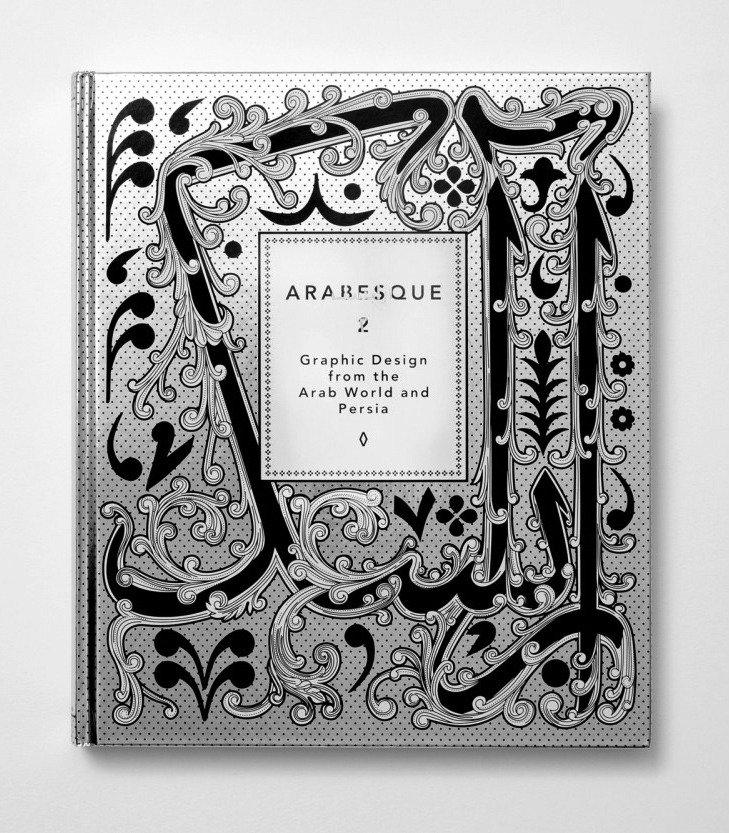

Hardcover, 208 pages
9.8” x 11.5” x 1”, 3.2 pounds
Cutting-edge graphic work from the Arab world and Iran that is emblematic of the cultural emancipation of this entire area. Young designers in the region are playing a part in this movement by increasingly emancipating themselves creatively. In their work, they are charting their own compelling course between local visual convention and a modern international style. This work is particularly relevant to those creating street art and poster design. Arabesque 2 also features graphic design, logos, editorial design, and illustration by young designers and activists from Egypt, Iran, Saudi Arabia, Jordan, Lebanon, and the United Arab Emirates. Regardless of the location and nationality of their creators, all of the examples included in the book combine modern design with the traditional, letter-based canon of Arab forms in striking ways. The book’s preface is written by John Martin, co-founder of Art Dubai. Additional texts and interviews describe the environments in which the featured designers and artists work. Editors Ben Wittner and Sascha Thoma round out Arabesque 2 with a CD-ROM that features four typefaces related to its themes.
Hardcover, 208 pages
9.8x 1 x 11.5 in, 3.2 pounds
Published by Gestalten
Language in English
ISBN 978-3899553307
Available from Amazon
Related Work
Newtopia: The State of Human Rights
Publication
2013.03.31
Ghent, BE

Hardcover, 256 pages
6” x 8.9” x 1”, 1.1 lbs
Authored by Ariella Azoulay, Stephane Hessel, Katerina Gregos, and Elena Sorokina Newtopia: The State of Human Rights looks at human rights through the work of 70 international contemporary artists. Much more than a straightforward exhibition catalogue, Newtopiais composed of three sections. The first part assesses the current state of the human rights debate in essays and philosophical reflections; the second collects contributions by various international human rights activists, in which gripping testimonies and historical reconstructions alternate with socio-political analyses; and the third reproduces a selection of artworks. Among the artists included are Kendell Geers, Taysir Batniji, Alejandro Cesarco, Pablo Picasso, Andy Warhol, Woloo, Nikita Kadan, Pia Rönike, Kostis Velonis, Zhou Zixi, Ai Weiwei, Marina Abramovic, Wilchar, Simon Starling, Boniface Mwongi, An-my Lê, and Ganzeer.
Hardcover, 256 pages
6x 1 x 8.9 in, 1.1 pounds
Published by Ludion
Language in English
ISBN 978-9461300751
Available from Amazon
Related Work
Global Activism: Art And Conflict in the 21st Century
Publication
2015.08
Cambridge, MA
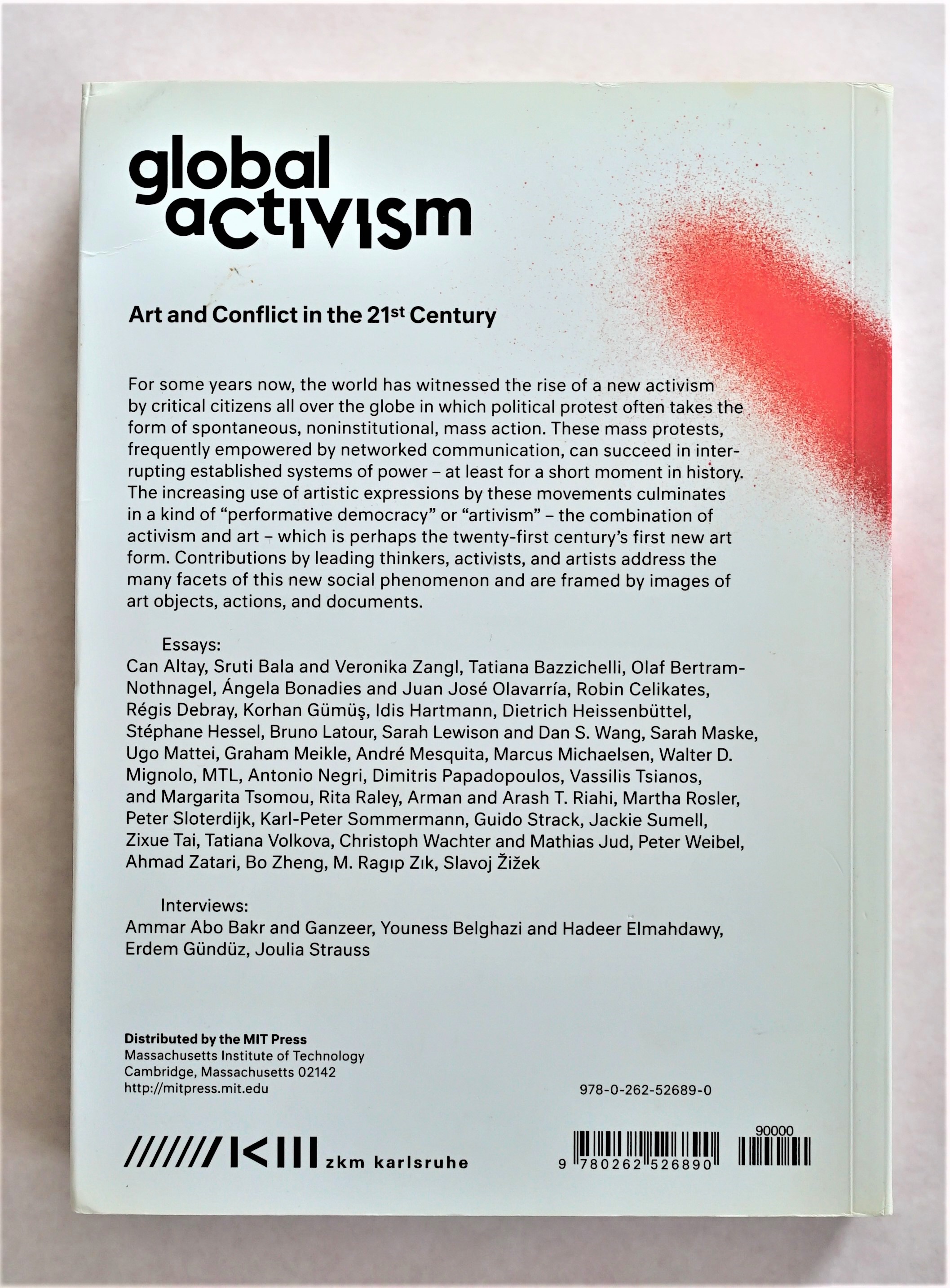

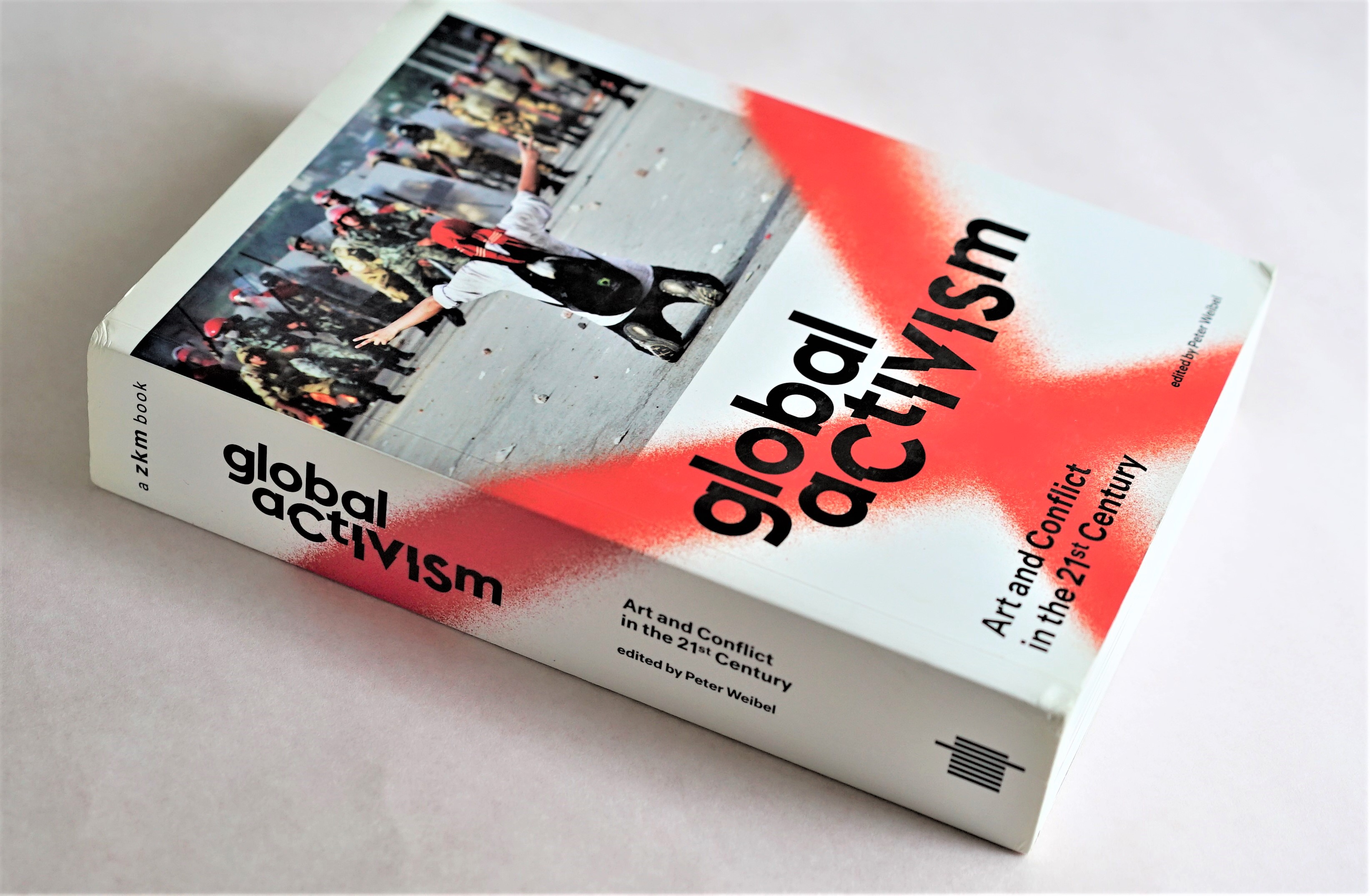
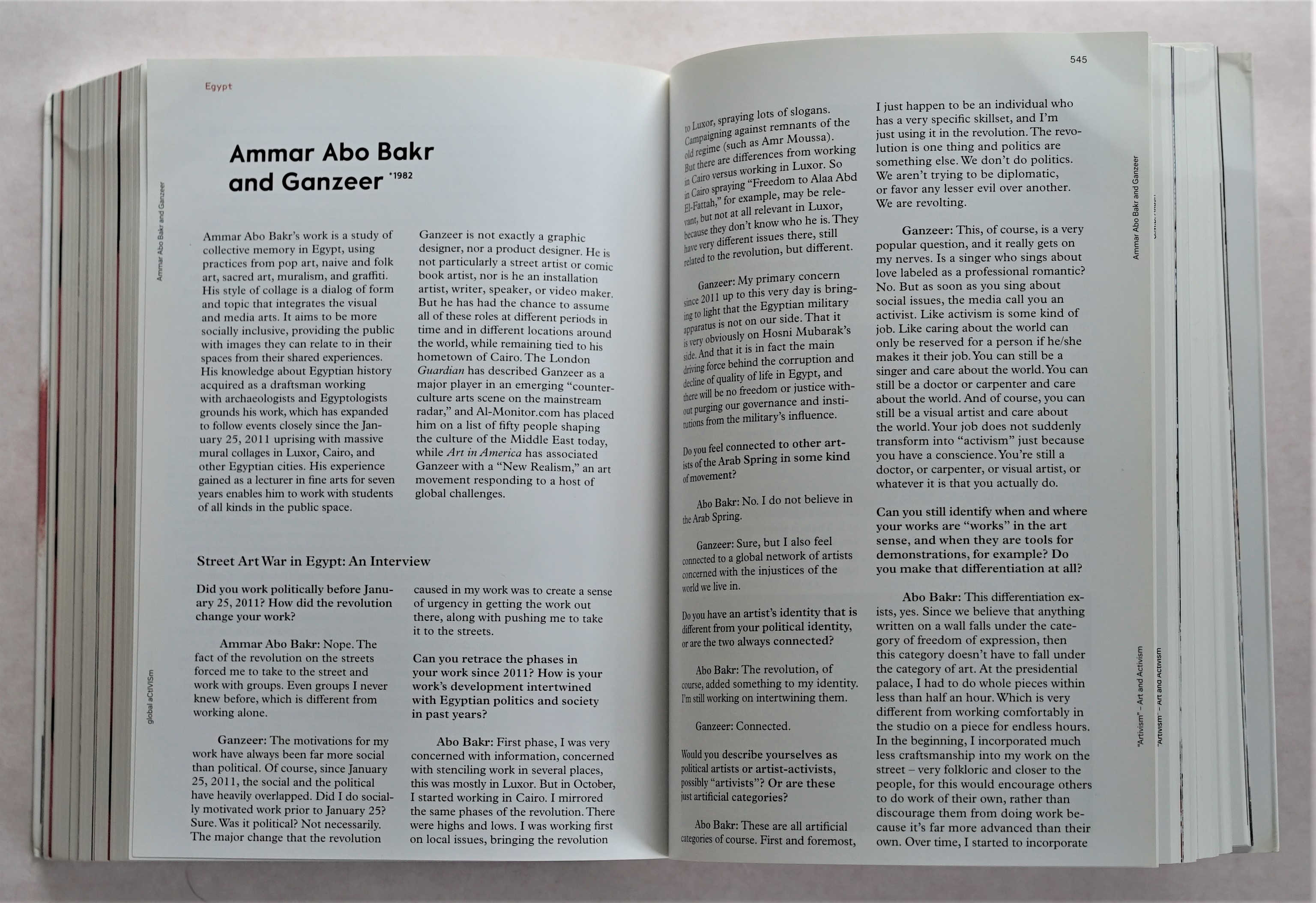


Paperback, 600 pages
9.4” x 6.8” x 1.8”, 4.6 lbs
Today political protest often takes the form of spontaneous, noninstitutional, mass action. Mass protests during the Arab Spring showed that established systems of power―in that case, the reciprocal support among Arab dictators and Western democracies―can be interrupted, at least for a short moment in history. These new activist movements often use online media to spread their message. Mass demonstrations from Tahrir Square in Cairo to Taksim Square in Istanbul show the power of networked communication to fuel “performative democracy”―at the center of which stands the global citizen. Art is emerging as a public space in which the individual can claim the promises of constitutional and state democracy. Activism may be the first new art form of the twenty-first century.
global aCtIVISm (the capitalized letters form the Latin word civis, emphasizing the power of citizens) describes and documents politically inspired art―global art practices that draw attention to grievances and demand the transformation of existing conditions through actions, demonstrations, and performances in public space. Essays by leading thinkers―including Noam Chomsky, Antonio Negri, Peter Sloterdijk, and Slavoj Žižek―consider the emerging role of the citizen in the new performative democracy. The essays are followed by images of art objects, illustrations, documents, and other material (first shown in an exhibition at ZKM Center for Art and Media, Karlsruhe) as well as case studies by artists and activists.
Essays by:
Can Altay, Sruti Bala and Veronika Zangl, Tatiana Bazzichelli, Olaf Bertram-Nothnagel, Angela Bonadies, Robin Celikates, Korhan Gümüs, Dietrich Heißenbüttel, Bruno Latour, Sarah Maske, Ugo Mattei, Graham Meikle, André Mesquita, Marcus Michaelsen, Walter D. Mignolo, MTL, Antonio Negri, Dimitris Papadopoulos, Vassilis Tsianos and Margarita Tsomou, Rita Raley, Arman and Arash T. Riahi, Martha Rosler, Peter Sloterdijk, Karl-Peter Sommermann, Guido Strack, Jackie Sumell, Zixue Tai, Tatiana Volkova, Christoph Wachter and Mathias Jud, Dan S. Wang and Sarah Augusta Lewison, Peter Weibel, Ahmad Zatari, Bo Zheng, Ragip Zik, Slavoj Žižek.
Interviews with:
Ammar Abo Bakr and Ganzeer, Younes Belghazi and Hadeer Elmahdawy, Erdem Gündüz, Joulia Strauss
Paperback, 600 pages
9.4x 6.8 x 1.8 in, 4.6 pounds
Published by The MIT Press
Language in English
ISBN 978-0262526890
Available on Amazon