
Freedom of the Presses
Publication
2018.01.22
Brooklyn, NY
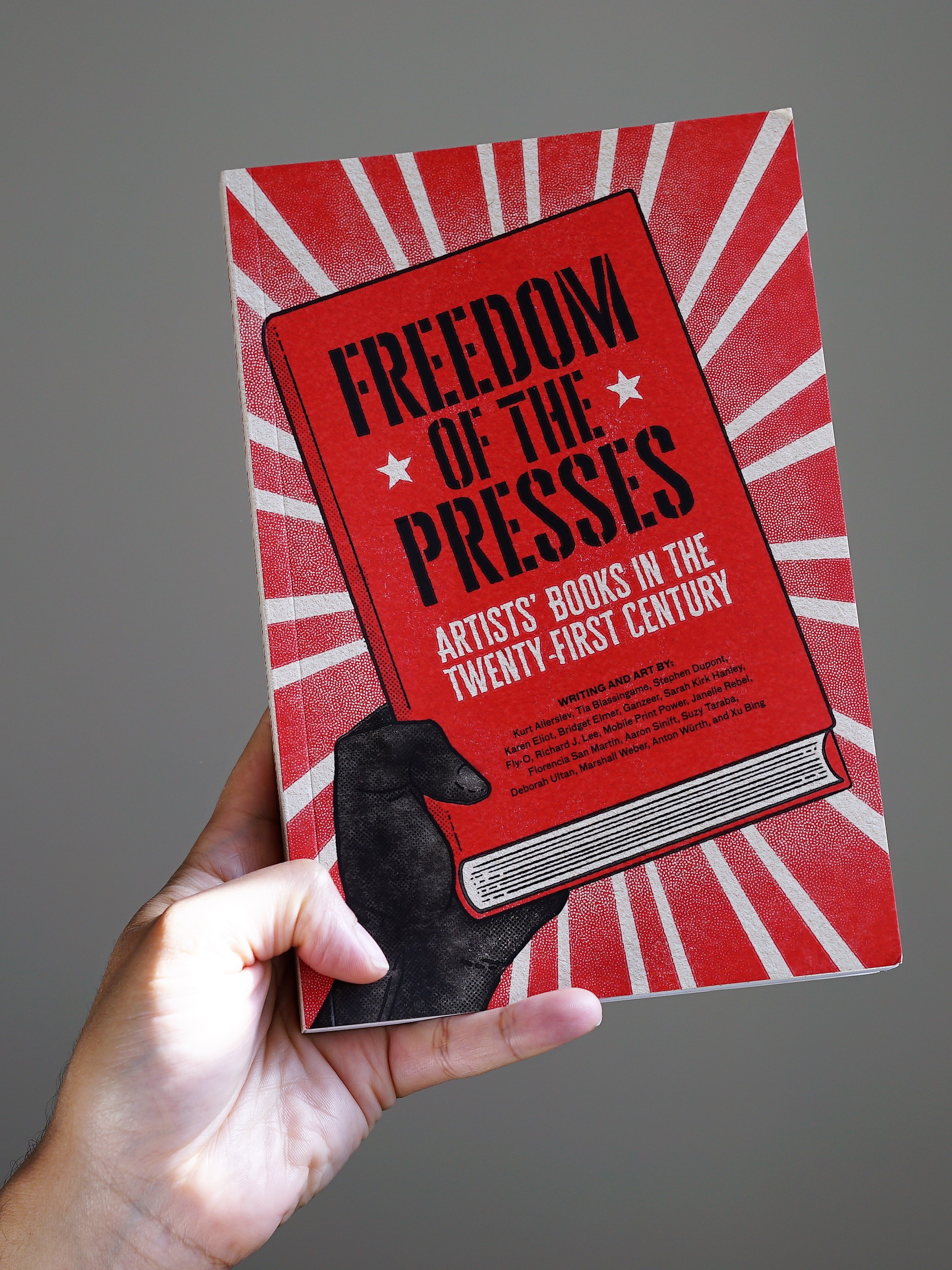
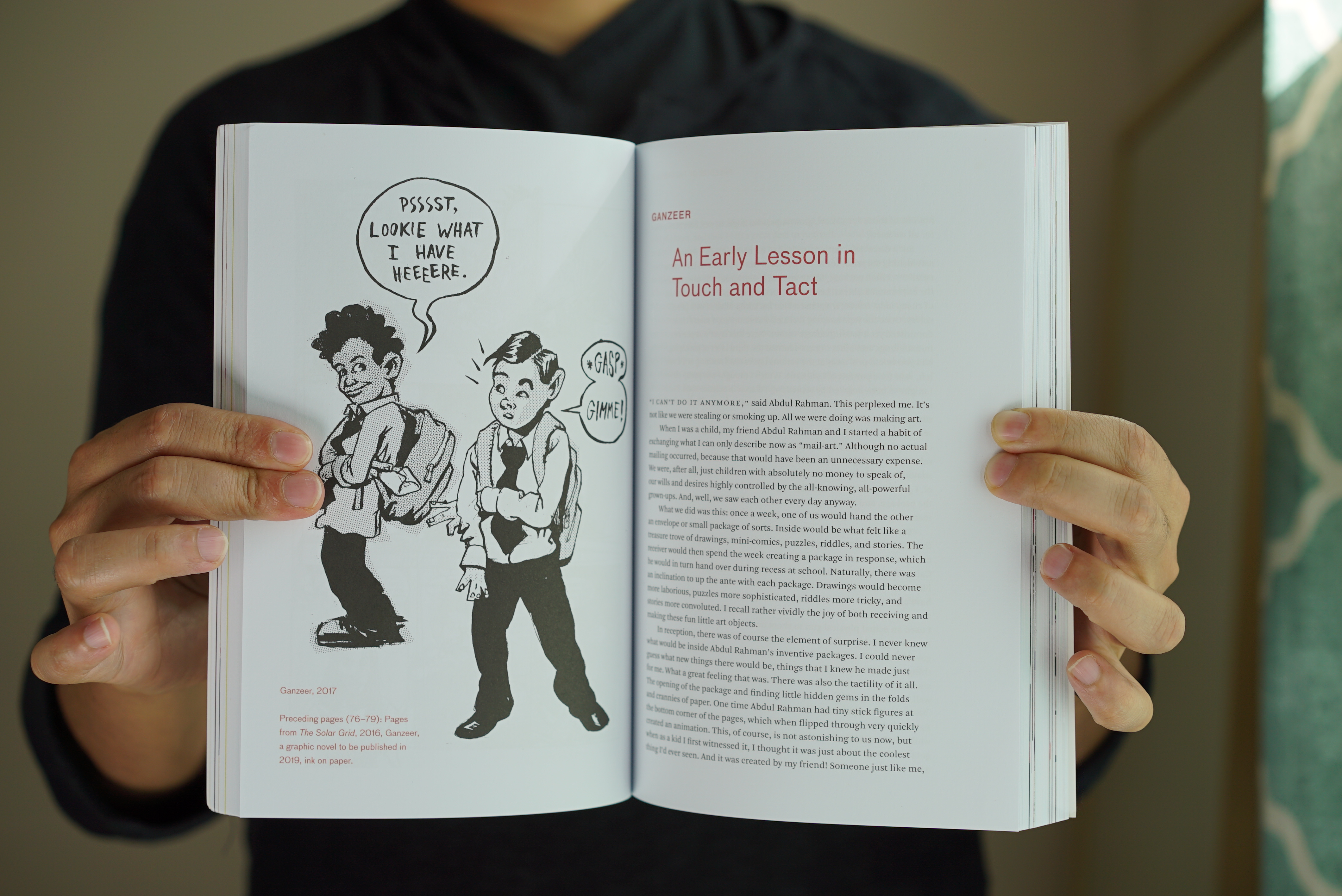
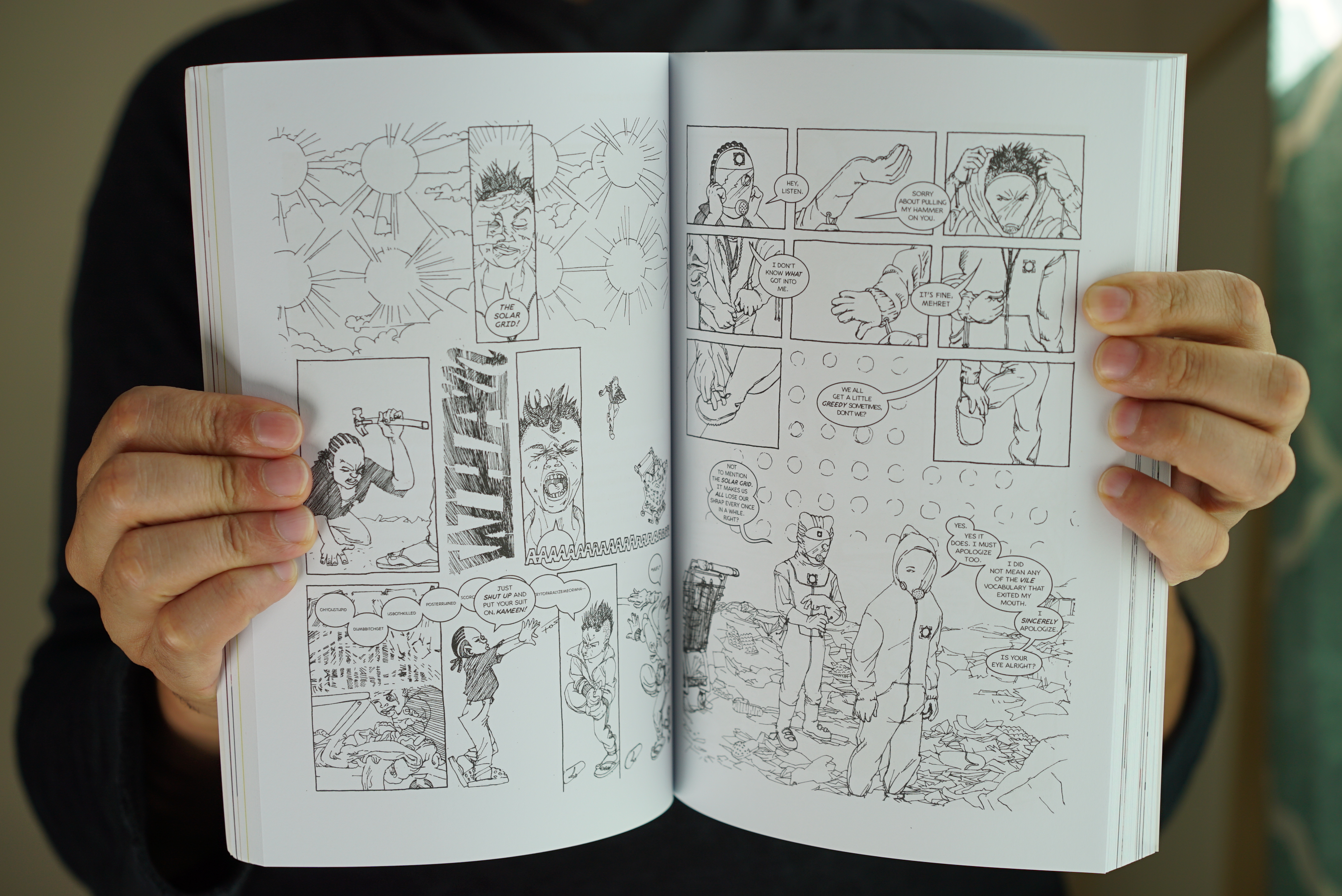
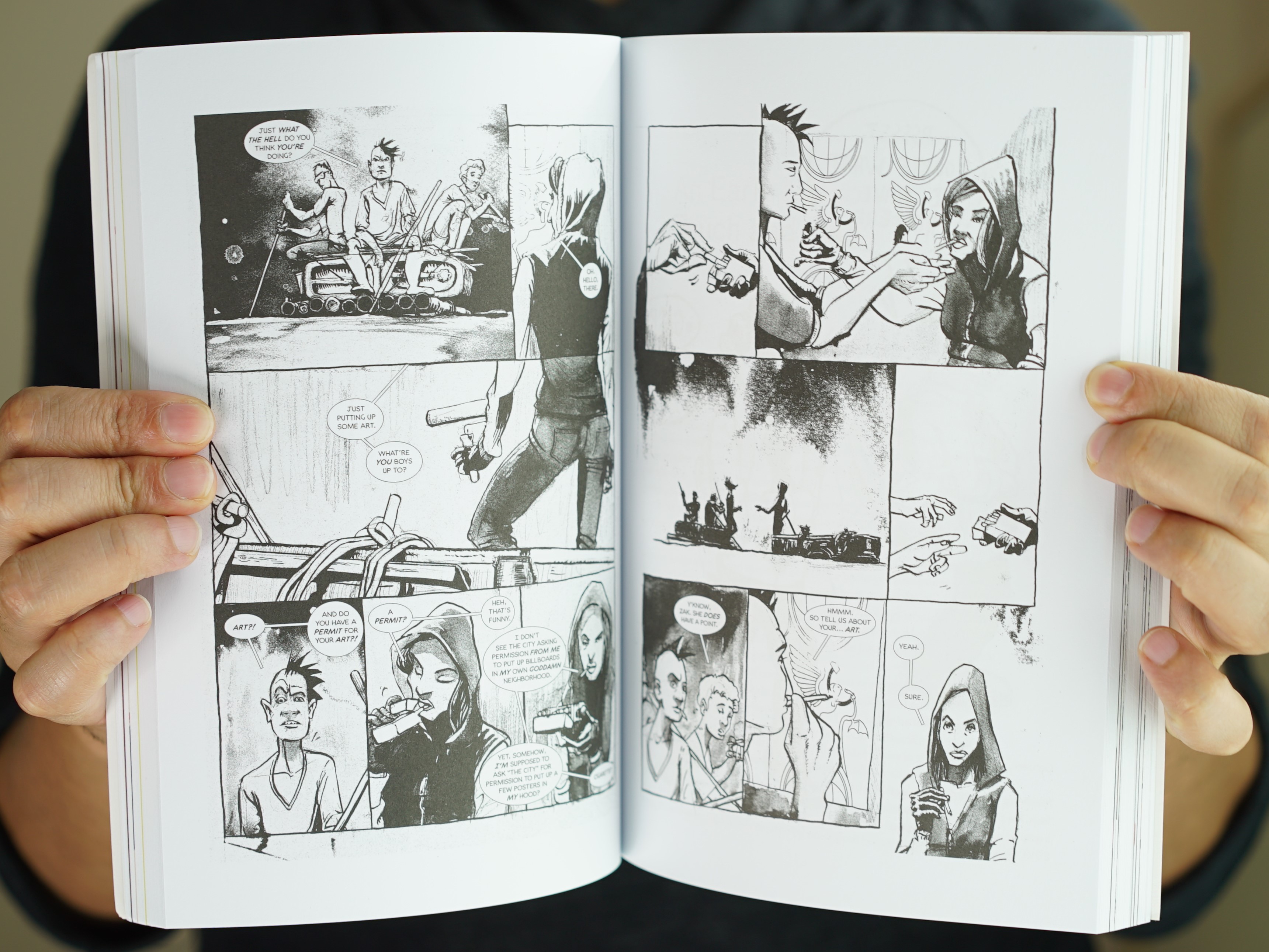
FREEDOM OF THE PRESSES is here, a wonderful tome of a book about, well, books. In particular Artist Books, but in an ideal world all books could learn a thing or two from the practice of bookmaking when undertaken by artists.
Curated by the fine folks at Booklyn, Inc., FREEDOM OF THE PRESSES offers insight from 16 authors/artists (of which I’m honored to be one of them), whose practices are so diverse that the book ends up being a rather eclectic collection of piercing viewpoints and sly strategies when it comes to the act of bookmaking. What Booklyn have presented us with is an essential resource, not just for book-artists but even those interested in traditional publishing as well. You will come out of it thinking about books in a completely new light, which will likely have you embarking on your next book project with newfound insight, enthusiasm, and above all purpose.
FREEDOM OF THE PRESSES: ARTISTS’ BOOKS OF THE TWENTY-FIRST CENTURY is available from Amazon.
Curated by the fine folks at Booklyn, Inc., FREEDOM OF THE PRESSES offers insight from 16 authors/artists (of which I’m honored to be one of them), whose practices are so diverse that the book ends up being a rather eclectic collection of piercing viewpoints and sly strategies when it comes to the act of bookmaking. What Booklyn have presented us with is an essential resource, not just for book-artists but even those interested in traditional publishing as well. You will come out of it thinking about books in a completely new light, which will likely have you embarking on your next book project with newfound insight, enthusiasm, and above all purpose.
FREEDOM OF THE PRESSES: ARTISTS’ BOOKS OF THE TWENTY-FIRST CENTURY is available from Amazon.
Related Work
Who Will Speak For America?
Publication
2018.06.26
Philadelphia, PA
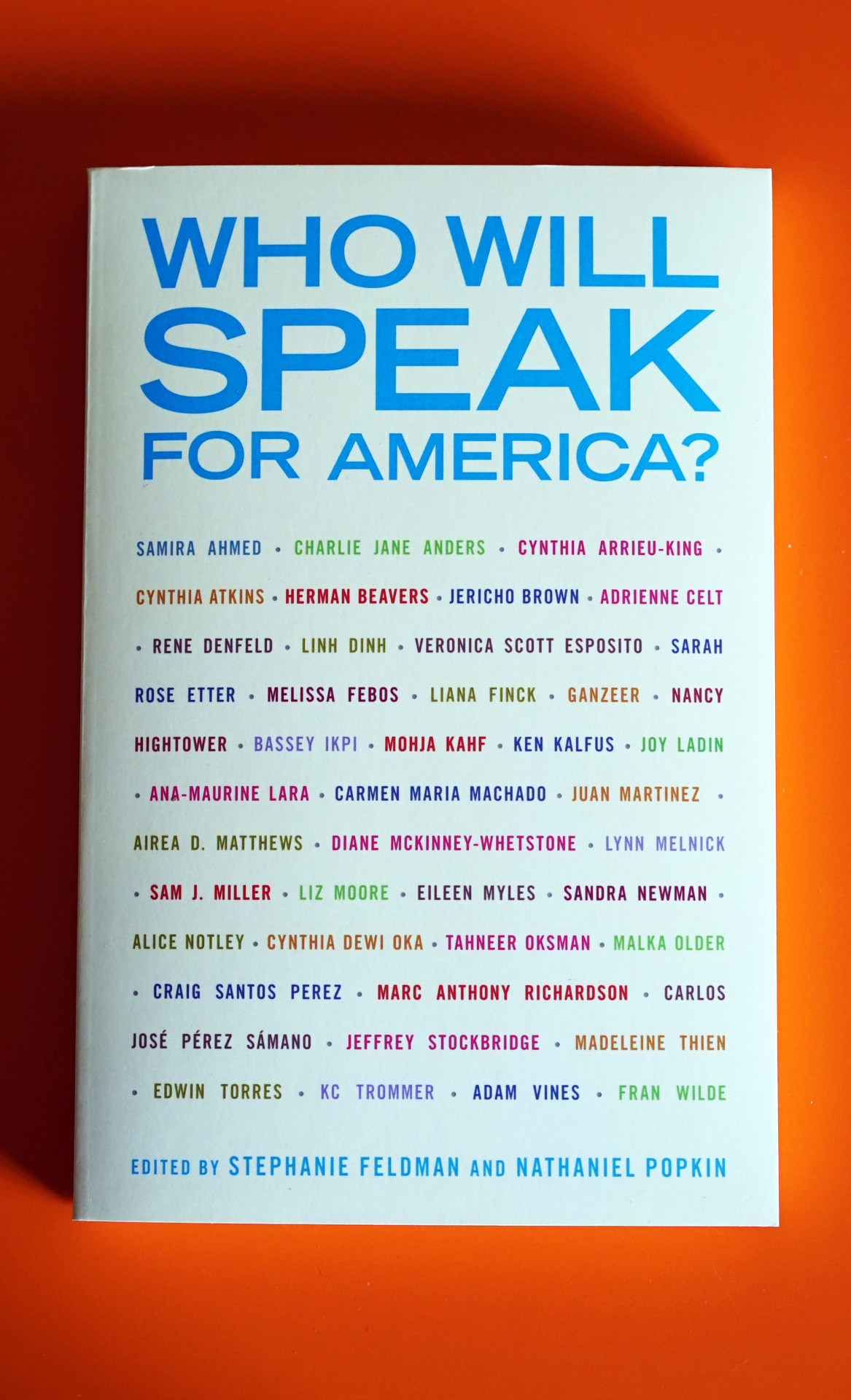

Just got my copy of Who Will Speak For America? edited by Stephanie Feldman and Nathaniel Popkin, published by Temple University Press.
There are 42 contributors in this tome, with contributions ranging from poetry to fiction to essays. Molly Crabapple says it’s “Panoramic in scope and exquisite in execution.”
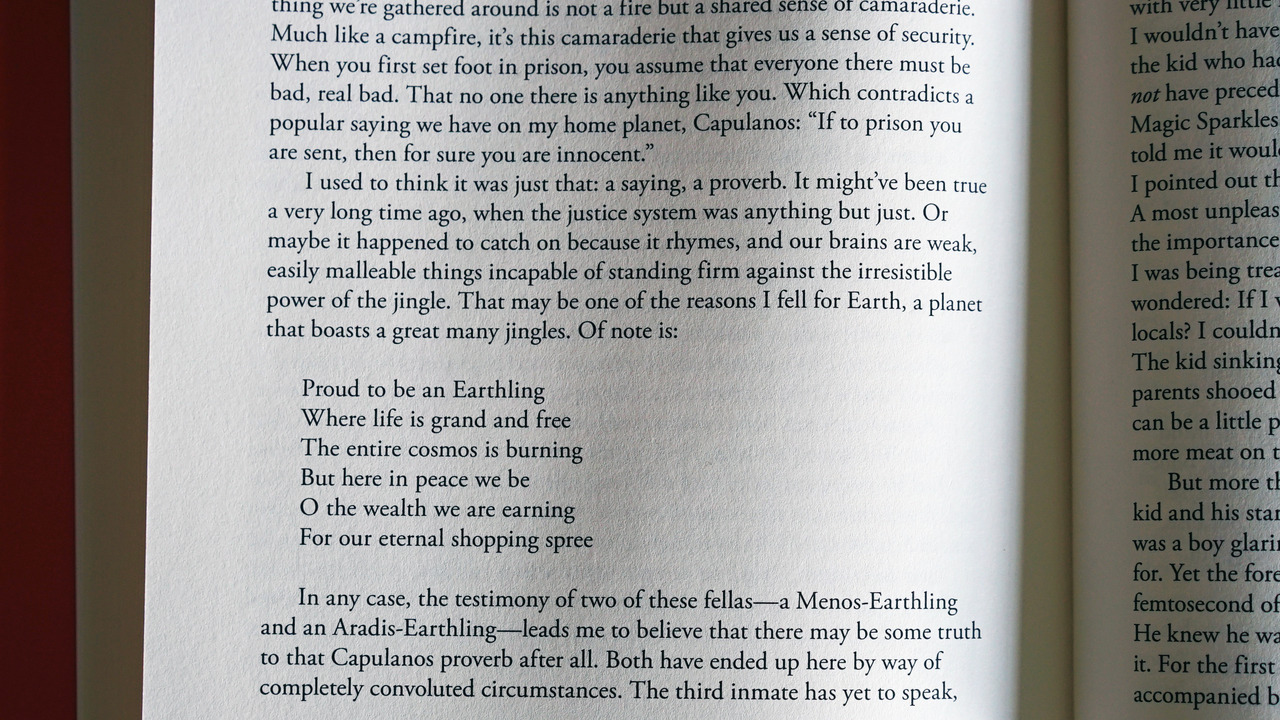
I happen to have a rather peculiar piece of short fiction in there titled CHARLIE AND THE ALIENS. And as the title suggests, there are aliens aplenty. I’ve even got a merry little jingle in there, and a possibly even more peculiar illustration that I’m proud to have snuck into a serious academic book.
Official release date is July 2, with all royalties from sales benefiting the Southern Poverty Law Center.
Paperback, 238 pages
6 x 0.8 x 9 inches, 12.3 ounces
Published by Temple University Press
Language in English
ISBN 978-1439916247
There are 42 contributors in this tome, with contributions ranging from poetry to fiction to essays. Molly Crabapple says it’s “Panoramic in scope and exquisite in execution.”
I happen to have a rather peculiar piece of short fiction in there titled CHARLIE AND THE ALIENS. And as the title suggests, there are aliens aplenty. I’ve even got a merry little jingle in there, and a possibly even more peculiar illustration that I’m proud to have snuck into a serious academic book.
Official release date is July 2, with all royalties from sales benefiting the Southern Poverty Law Center.
Paperback, 238 pages
6 x 0.8 x 9 inches, 12.3 ounces
Published by Temple University Press
Language in English
ISBN 978-1439916247
Related Work
The Big Book of Cyberpunk
Fiction
2018+2023.10
Denver, CO+Houston, TX
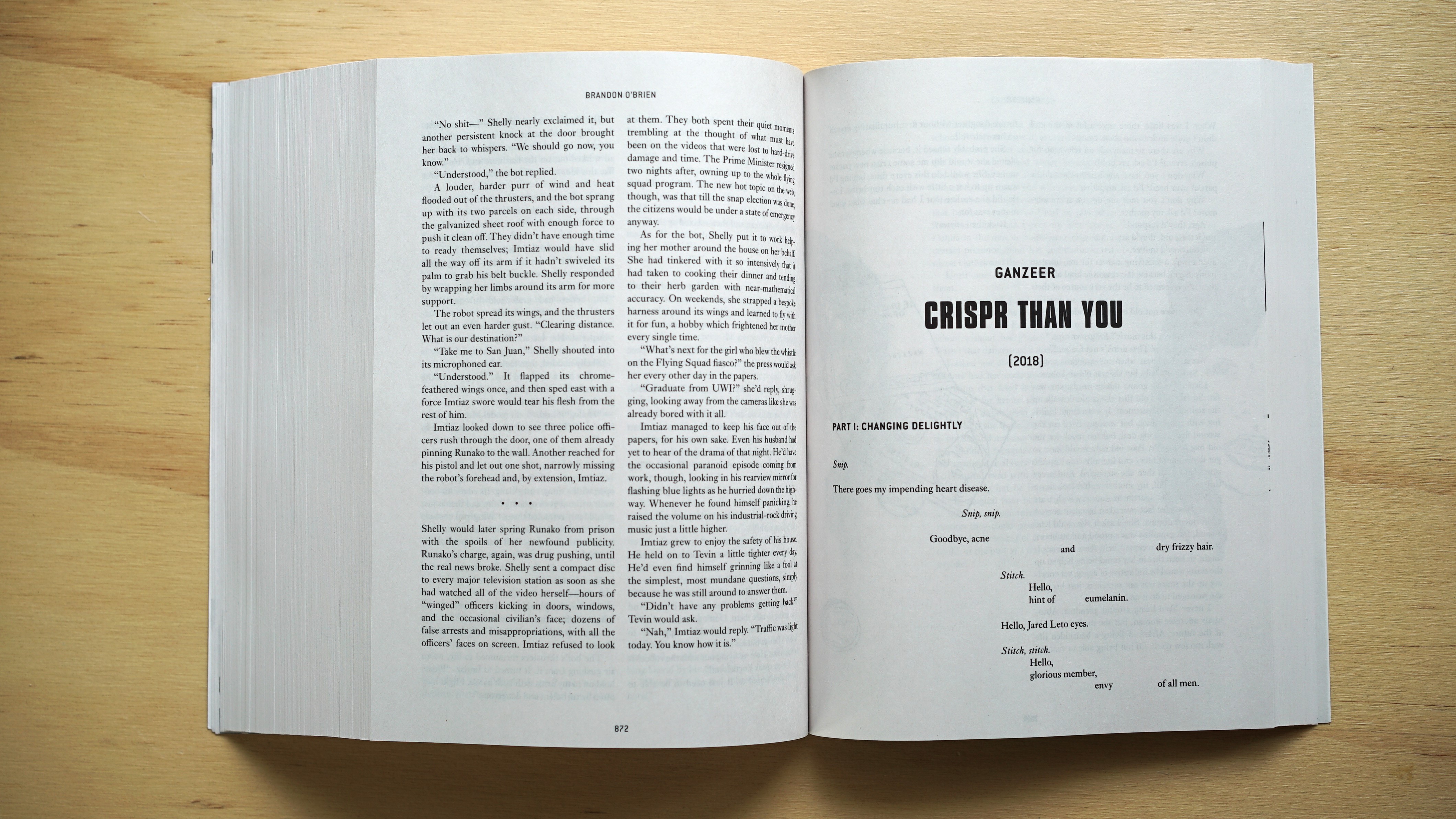

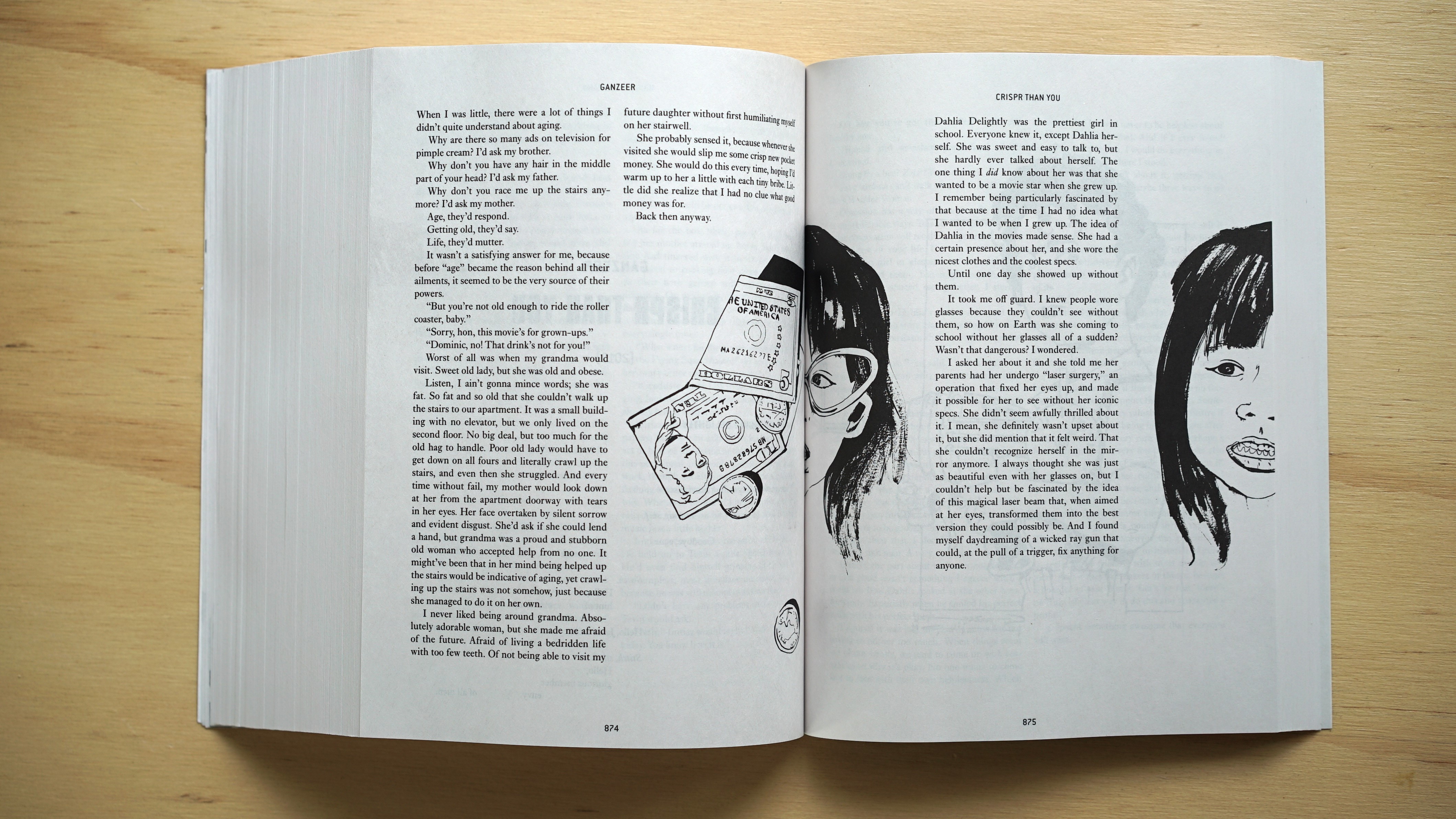


Words + Ink on Paper + Adobe Photoshop + Illustrator + Indesign
Inclusion of the short story CRISPR THAN YOU in the 116-page anthology THE BIG BOOK OF CYBERPUNK, edited by Jared Shurin and published by Vintage.
Related Work
The Palestinian Problem
Non-Fiction Words + Illustration
2023.10.18
Houston, TX

The new trade corridor revealed by Benjamin Netanyahu at the UN General Assembly three weeks ago would connect India to a port in Israel via maritime and rail links as well as energy pipelines and fiber optic cables that pass through the Arabian Peninsula.
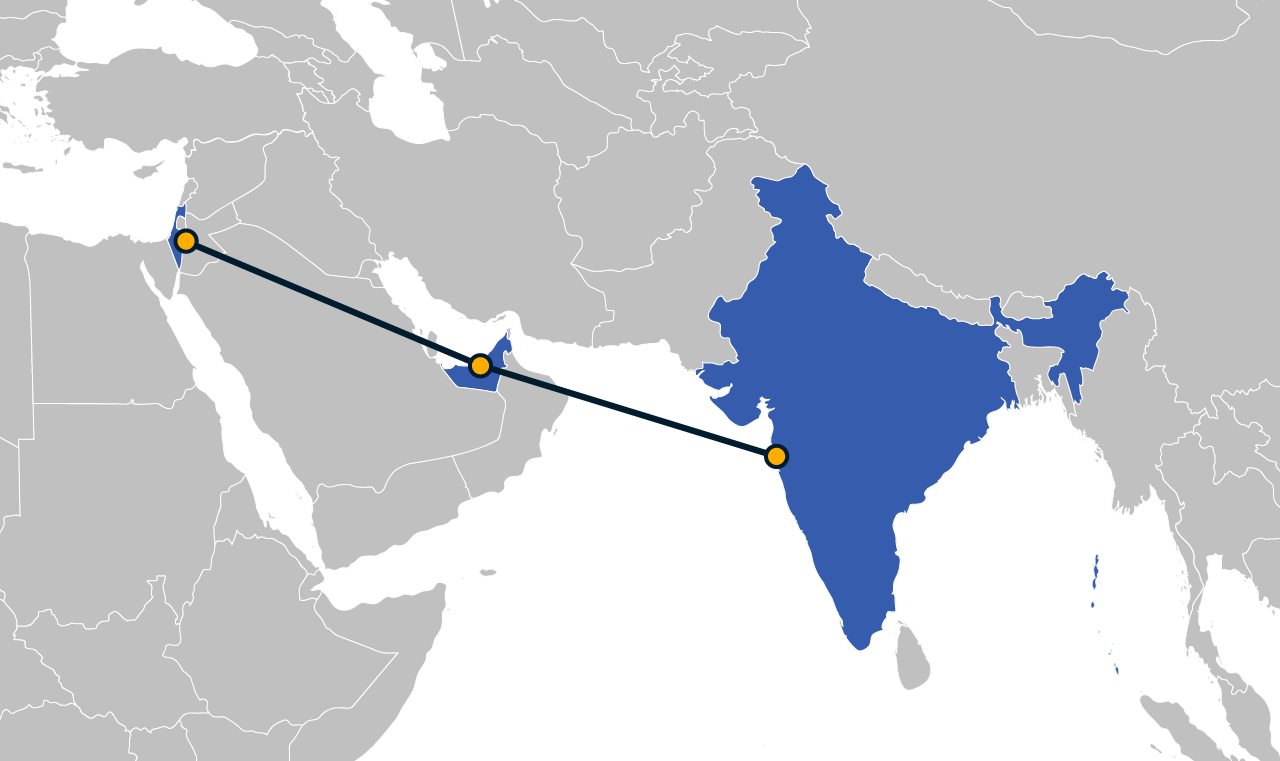
Hence the recent treaty with the Emirates and talks of an impending treaty with Saudi Arabia. Goods of course would then move from Israel to Europe and the United States, theoretically cutting transport time while also eliminating dependance on what has arguably been the single most important global trade artery for the past 154 years: The Suez Canal. Egypt has for the longest time avoided privatizing the state-owned Suez Canal Authority despite express interest from the Gulf Arab states. Add to that, the defeat of the US-backed Saudi/UAE assault on Yemen, which—had they won—would've given them significant control over the Bab El-Mandab Strait, without which you couldn't enter into the Red Sea to make it to the Suez Canal to begin with. Instead, the victory was to go to Iranian-backed Houthi-rebels (Iran, ever the thorn in Saudi's geopolitical ambitions). Alas, a complete monopoly over the most important trade route in the world was not to be obtained by Saudi/UAE.
In comes Israel with a visionary new solution, one in which it would get to have a huge stake. The plan is applauded and encouraged by the United States, UK, and Europe's biggest players: France and Germany. Caveat though, there's that thorn again, embodied in another Iran-backed guerilla fighting group: Hamas. It was time for Israel to do away with them (despite Israel helping create Hamas in the first place in order to undermine Yasser Arafat's Fatah in 1987). In fact, it was time to do away with the Palestinians altogether, clear out Gaza and claim the entirety of the land once officially known as Palestine (which Netanyahu had the audacity to claim was in fact the map of Israel in 1948 during his latest UNGA speech), even though it looked more like this:
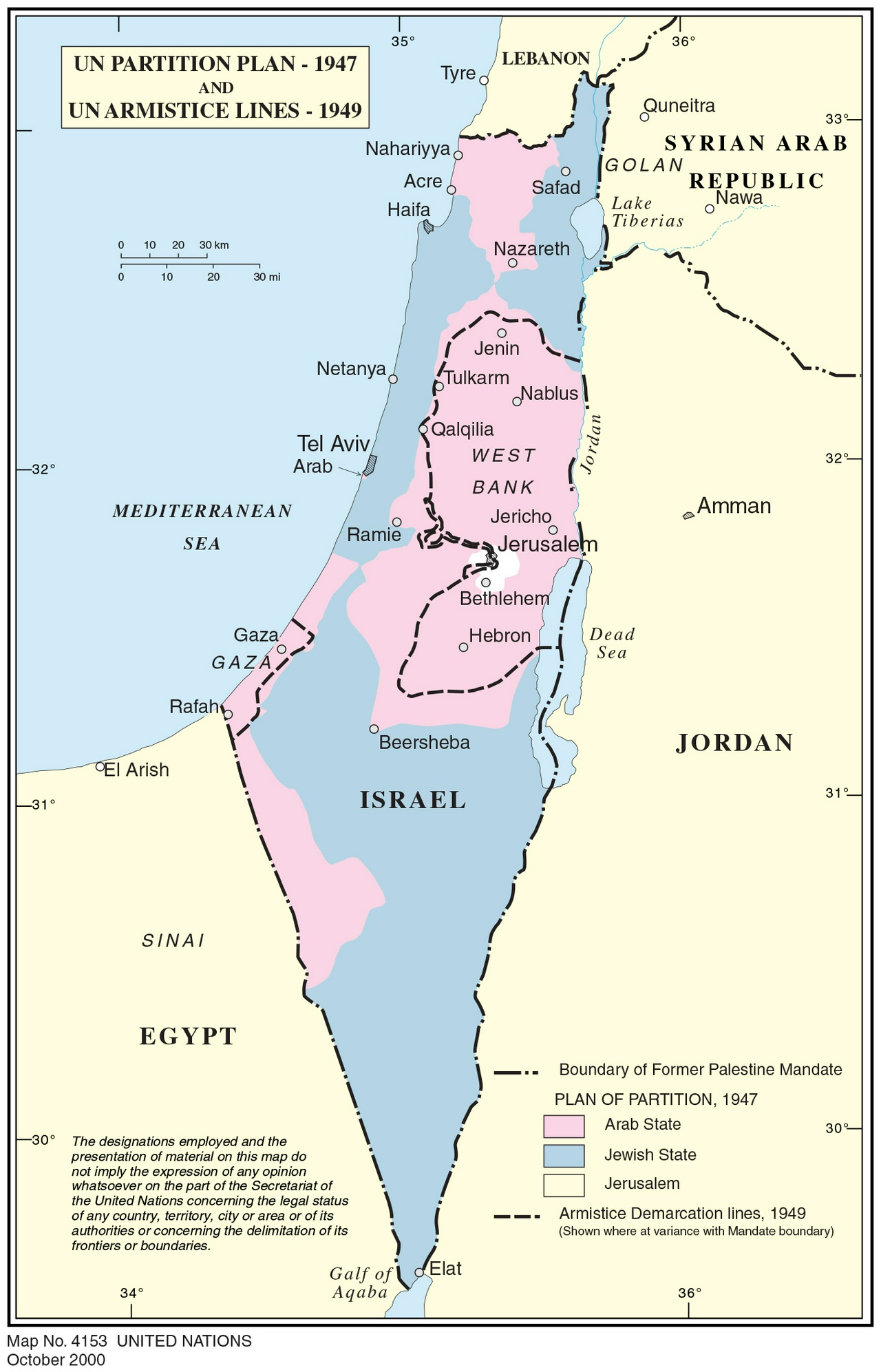
But to clear out Gaza? Over 2 million people? Something very dramatic would have to occur in order to galvanize the international community behind a move like that.
I present you with not one major story reporting as much, but two:
- Egypt Warned Israel of Hamas Attack Days Earlier, Senior US Politician Says—The Guardian
- US Intelligence Warned of The Potential For Violence Days Before Hamas Attack—CNN
Additionally, the “Peace Festival” that took place three miles outside of what is practically the densest concentration camp on the planet was moved to that specific location only 48 hours before the event. And the Guardian reports that festival goers were only informed of the new location a handful of hours prior (some who had traveled across the world for it). Hamas leadership itself admitted to being surprised at how easy it was for their fighters to breach the Israeli constructed barriers, typically very heavily guarded and surveilled.
Moreover, this notion of resettling Palestinians in Sinai has been pushed by Israel for a long time, since Mubarak was in power. It's been a lifelong dream of Netanyahu and it's one I'm sure you'll see mainstream Western media incessantly pushing in the next few days, while placing most of the fault of Palestinian plight on Egypt's shoulders. “Why is Egypt being such a jerk? Why won't it let the Palestinians through?”
The answer is obvious to literally anyone in the region: Palestinians would henceforth lose their claim to their own land, just as had happened to many a Palestinian before them. The only lens by which such a preposterous resettlement plan makes sense is a blatantly racist one that views all Arab-speaking peoples as a single ethnicity. As if Palestinians have no history in or connection to the land they're being forced to leave. And it's really messed up when other nation states think they have the right to decide where to settle people without involving those people in the decision-making process.
Herein lies the biggest barrier to Netanyahu's grand plan: the desire of the Palestinian people. It is the same desire they've held onto since the Nakba of 1948: The right of return.
In fact, there are a number of contingencies upon which lie the success of Netanyahu's demented masterplan, and it is those contingencies that I suspect may have made Saudi Arabia a little reluctant to rush into signing any treaties with Israel just yet. Granted, they do seem to be moving in Netanyahu's favor thus far. The problem with it all though despite its grand outlook is that it still doesn't suspect a number of potential left-field outcomes.
a) Assuming Egypt Resettles Palestinians in Sinai
Aside from it not being entirely in Egypt's interest to keep them there forever, just to guarantee its sovereignty over its own territories and to ensure it doesn't get its share of attacks from insurgency groups for maintaining its peace with the country that stole their land, Egypt would soon realize that it may not be in her interest to allow this new India-Arabia-Israel trade corridor to exist. At least not securely. After all, it would be cutting into Egypt's already dwindling sources of income. So Israel may find itself in a situation where it is faced with guerilla attacks by groups trained, armed, and funded by Egypt itself (while pretending to maintain a facade of peace). Supporting insurgency groups is something Egypt has quite a bit of history with; The Feda'yeen (literally translates to “sacrificial fighters” of the 1950's and 60's), the National Liberation Front in Algeria, and the Mujahideen of Afghanistan to battle the Soviet Union on behalf of the United States (some of those same mujahideen would end up being a big part of the formation of the Taliban a little over a decade later—Oops) to name some of the most well-known ones. And you better believe an Egyptian-backed group of guerilla fighters would pose a far more formidable threat to Israel than Hamas.
b) Popular Support
Masses across the Arab-speaking world have already taken to the street in huge numbers demanding an end to Israeli atrocities, marking an unprecedented unity between people stretching from Morocco all the way to Iraq and beyond, even including other non-Arab speaking peoples such as Iranians and Turks. Netanyahu may have suspected as much, but he may be taking a serious gamble on the fact that the leaders of these nations are autocratic and certainly act against the wishes of their own populations all the time. But his gamble overlooks the fact that among some of those autocrats are populist egomaniac nut-bags who might see this as an opportunity to fill the pan-Arab leadership role left vacant since Nasser passed in 1970, a role that would certainly give them an everlasting legacy long after they're dead. It is not an understatement to say that if Nasser rose from his grave today, his welcome would be on par with the Christian world's second coming of Jesus Christ—a privilege that not even Sadat would enjoy, despite the latter being the one who won back the Sinai Peninsula from Israel and the former being the one who lost it. An irony not at all lost on any Arab leader. Principle and moral standing will always garner far more respect than pragmatism, at least where I come from.
c) Proxy Clusterfuck
This pressure exerted by US/UK/EU to resettle the Palestinian people—let alone their genocide—and participate in a complete alteration of regional geopolitics might even push Egypt to change its alliances, siding instead with Iran, Turkey, Russia and China, the latter having already increased investment in Egypt by 315% over the last 7 years and opting a stern position against Israel's latest aggression against Palestinians. Not to mention that this newly proposed India-Arabia-Israel corridor would somewhat undermine China's own New Silk Road, and disrupting the corridor would certainly be in the Asian giant's best interest. So, Israel may find itself trading Hamas for being caught in a big proxy war between the great powers of the East (China/Russia/Iran and quite possibly even Turkey) and those of the West (US/UK/EU).
Any way you look at it, none of what's been going on is actually about “the Jews” or Palestinians at all, who are the biggest victims in a big game of geopolitik centered around—not race, faith, or ethnicity as they'll have you believe—but in fact revolves entirely around money.
Or in other words: “It's the economy, stupid.”*
* Relatedly, there is the issue of the 30 billion cubic meters of Gas in fields just off Gaza’s shore, which Israel has, since October 7th, completely seized.
Related Work
Deep Dream: Science Fiction Exploring the Future of Art
Fiction
2023—2024
Houston, TX + Mexico City, MX + Cambridge, MA + London, UK


Written in 2023 and published in 2024, UNAUTHORIZED (OR, THE LIBERATED COLLECTORS COMMUNE) is a work of short prose fiction written specifically for DEEP DREAM, the 2024 edition of MIT Press’s Twelve Tomorrows series edited by Indrapramit Das. This edition’s focus is to explore the future of art and features original stories by a global assortment of science fiction lumanries such as: Samit Basu, Aliette de Bodard, Vajra Chandrasekera, Cassandra Khaw, Lavanya Lakshminarayan, Sloane Leong, Bruce Sterling, Wole Talabi, and Lavie Tidhar.
Excerpt:
“Please,” said the crying woman on her knees, “both my husband and my mistress left me. My baby boy died too.” The droid standing in front of her accessed her family records and found that her son did indeed perish 1.3392E+22 femtoseconds ago. Hit-and-run, one of the 113 vehicular homicides committed across the country that very same day. Cars were still the leading cause of death in America, followed by firearms.
“I have nothing else to live for, please.” She clutched onto the droid’s lower body like a demented cat on speed. A half dozen other androids were hauling out painting after painting from what looked and smelled like a hermit’s art studio. One droid was pushing along a turntable and a wagonful of records.
“That is no excuse for such blatant abuse of raw material, Miss Amoff, which I’m sure you are very much aware of,” said the android through its voice box to the tortured woman on her knees. “If, however, you are sincere in your sentiments, assisted suicide is legal and can certainly be arranged for you.” The androgynous voice was firm and authoritative, but oddly warm, and very human. A stark contrast to the droid’s boxy exterior.
Ally Amoff’s back muscles could no longer raise a convincing enough argument to hold her up. Her fingernails went scraping down the droid’s cold metal in a slow, high-pitched screech until her face finally hit the floor.
“Alternatively,” said the droid, “there are other more considerate ways to pursue your passions. The digital tools that emulate the look and feel of analogue are in great abundance. Furthermore, many a corporation seeks out individuals with your particular set of skills. I have no doubt they would be more than willing to employ you in service of their many wonderful products and offerings.”
“No.” Ally’s voice cracked. “You . . . you don’t understand, you damn . . . you stupid robot!”
The droid agreed that Ally Amoff was only partially correct in her assessment.
“That is correct, Miss Amoff, I indeed do not understand the logic behind your emotional turmoil. In terms of intelligence, however, my IQ score measures at three hundred, and thus I’m afraid the ‘stupid’ descriptor does not quite apply.”
Ally motioned with her fingers to the side of her head and emulated the pulling of a trigger.
A loud unmistakable bang could be heard moments later as the droids left Ally Amoff’s home studio with her life’s work. Luckily, guns were still legal in Texas, and Ally could be spared the exorbitant costs of an assisted-suicide facility.
The droids steered their vehicles through the streets of Marfa. The city had become one of the biggest hubs of unauthorized artmaking in America, thanks initially to its remote location, which fostered the artistic breeding ground first cultivated decades prior by the acclaimed conceptual artist Donald Judd. A crackdown was inevitable; the government couldn’t afford to turn a blind eye to such a glaring waste of resources—not since Yellowstone.
Washington needed to show it had no intention of being as passive as previous administrations, not least to keep the populace from being swayed by the few dozen insurgency groups that popped up after Yellowstone. A new America was in the making, and it would be stronger than it had ever been before. Part of this new America was the full utilization of the advanced autonomous robot technology that US companies had developed in recent years. One vocation designated for these droids was collecting , the term used for locating and gathering frivolous products that utilized precious raw material in their construction, which at this point was pretty much all material. The tricky part was identifying what counted as frivolous. The robots needed parameters. Art was one of the first things to go. The federal government decided that material like paper, canvas, and pigment were all of better use on more essential goods, but that didn’t keep artists in America from pressing on. America was a big country, and artists could migrate away from the major metropoles to places far from the cold-hearted grip of Collectors. Places like Marfa.
Texas still did not appreciate taking any shit from Washington, and it certainly did not appreciate being accused of being in cahoots with Open Range, one of the South’s most unyielding insurgency groups. The governor of Texas publicly declared he would personally be dealing with the proliferation of artists himself—a macho statement that only amounted to putting out an order to assemble a first-rate squad of Collectors from the finest droids across Austin, Dallas, and Houston. Chief among these droids was Joe1ker18, which was designated to helm a squad of a dozen Collectors. The squad had been making significant progress until Joe1ker18 went missing. Kon10do32 was brought in as Joe1ker’s replacement. As if anyone would’ve been able to tell them apart anyway. Until today, that is, thanks to the ten long scrapes that now ran down Kon10do’s lower half.
Excerpt:
“Please,” said the crying woman on her knees, “both my husband and my mistress left me. My baby boy died too.” The droid standing in front of her accessed her family records and found that her son did indeed perish 1.3392E+22 femtoseconds ago. Hit-and-run, one of the 113 vehicular homicides committed across the country that very same day. Cars were still the leading cause of death in America, followed by firearms.
“I have nothing else to live for, please.” She clutched onto the droid’s lower body like a demented cat on speed. A half dozen other androids were hauling out painting after painting from what looked and smelled like a hermit’s art studio. One droid was pushing along a turntable and a wagonful of records.
“That is no excuse for such blatant abuse of raw material, Miss Amoff, which I’m sure you are very much aware of,” said the android through its voice box to the tortured woman on her knees. “If, however, you are sincere in your sentiments, assisted suicide is legal and can certainly be arranged for you.” The androgynous voice was firm and authoritative, but oddly warm, and very human. A stark contrast to the droid’s boxy exterior.
Ally Amoff’s back muscles could no longer raise a convincing enough argument to hold her up. Her fingernails went scraping down the droid’s cold metal in a slow, high-pitched screech until her face finally hit the floor.
“Alternatively,” said the droid, “there are other more considerate ways to pursue your passions. The digital tools that emulate the look and feel of analogue are in great abundance. Furthermore, many a corporation seeks out individuals with your particular set of skills. I have no doubt they would be more than willing to employ you in service of their many wonderful products and offerings.”
“No.” Ally’s voice cracked. “You . . . you don’t understand, you damn . . . you stupid robot!”
The droid agreed that Ally Amoff was only partially correct in her assessment.
“That is correct, Miss Amoff, I indeed do not understand the logic behind your emotional turmoil. In terms of intelligence, however, my IQ score measures at three hundred, and thus I’m afraid the ‘stupid’ descriptor does not quite apply.”
Ally motioned with her fingers to the side of her head and emulated the pulling of a trigger.
A loud unmistakable bang could be heard moments later as the droids left Ally Amoff’s home studio with her life’s work. Luckily, guns were still legal in Texas, and Ally could be spared the exorbitant costs of an assisted-suicide facility.
The droids steered their vehicles through the streets of Marfa. The city had become one of the biggest hubs of unauthorized artmaking in America, thanks initially to its remote location, which fostered the artistic breeding ground first cultivated decades prior by the acclaimed conceptual artist Donald Judd. A crackdown was inevitable; the government couldn’t afford to turn a blind eye to such a glaring waste of resources—not since Yellowstone.
Washington needed to show it had no intention of being as passive as previous administrations, not least to keep the populace from being swayed by the few dozen insurgency groups that popped up after Yellowstone. A new America was in the making, and it would be stronger than it had ever been before. Part of this new America was the full utilization of the advanced autonomous robot technology that US companies had developed in recent years. One vocation designated for these droids was collecting , the term used for locating and gathering frivolous products that utilized precious raw material in their construction, which at this point was pretty much all material. The tricky part was identifying what counted as frivolous. The robots needed parameters. Art was one of the first things to go. The federal government decided that material like paper, canvas, and pigment were all of better use on more essential goods, but that didn’t keep artists in America from pressing on. America was a big country, and artists could migrate away from the major metropoles to places far from the cold-hearted grip of Collectors. Places like Marfa.
Texas still did not appreciate taking any shit from Washington, and it certainly did not appreciate being accused of being in cahoots with Open Range, one of the South’s most unyielding insurgency groups. The governor of Texas publicly declared he would personally be dealing with the proliferation of artists himself—a macho statement that only amounted to putting out an order to assemble a first-rate squad of Collectors from the finest droids across Austin, Dallas, and Houston. Chief among these droids was Joe1ker18, which was designated to helm a squad of a dozen Collectors. The squad had been making significant progress until Joe1ker18 went missing. Kon10do32 was brought in as Joe1ker’s replacement. As if anyone would’ve been able to tell them apart anyway. Until today, that is, thanks to the ten long scrapes that now ran down Kon10do’s lower half.